
 Back
agenda
Back
agenda
Musicales de l'Ouille Allègre - Concert by Ensemble La Piémontoise
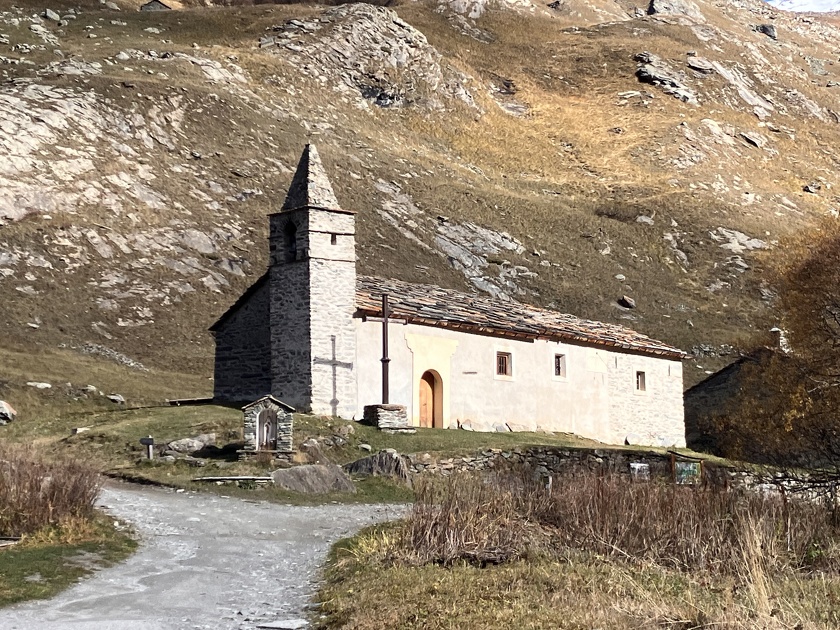
In this beautiful chapel, we are presenting a program entitled “À l’Italienne – Alla Francese.” You will have the opportunity to appreciate and compare the compositional styles of this period, spanning the late 17th to the mid-18th century, performed on period instruments.
Description
The Avérole Valley has always served as a route into Italy. Behind the Avérole Refuge lie the ruins of an old refuge and a path leading through a pass beneath the Collerin peak, before descending into Italy. In this beautiful Saint Pierre d’Avérole Chapel, we are presenting a program entitled “À l’Italienne – Alla Francese”. France-Italy: this is not a competition, but rather an opportunity for you to appreciate and compare the compositional styles of this period in both countries, from the late 17th century to the mid-18th century, and perhaps to see and hear how the composers influenced one another.
We shall begin with France with a Prelude by Sieur Demachy, one of the first composers to write for solo viola da gamba, followed by a suite by Antoine Dornel, organist, harpsichordist, and composer, who for a time was Rameau’s rival for the post of organist at Sainte Marie-Madeleine-en-la-Cité.
On the Italian side, we are not only traveling a few kilometers but also taking a journey back in time with a Canzona for bass, preceded by two short pieces for harpsichord by Girolamo Frescobaldi.
Here, the musical style is very different. G. Frescobaldi was one of the great Italian composers of the late 16th and early 17th centuries, an heir to the Renaissance and, alongside Claudio Monteverdi, a pioneer of a new style designed to express ‘affects’, gli affetti in Italian – through a new musical language: rubato, the ‘concitato’ style, dissonances, and numerous departures from the rules of composition were employed for expressive purposes.
We return to the 18th century with a Sonata by Paolo Benedetto Bellinzani. In Italy at that time, composers mainly wrote “sonatas” in three or four movements (here Adagio, Allegro, Adagio, Allegro), although there were also many “dance suites” in the French style.
Back in France, we will play one of Jacques Martin Hotteterre’s most famous suites.
The pieces making up the suites were stylized dance movements with evocative titles that referred to places, characters, or emotions.
Here they are for Hotteterre’s third suite, which will conclude this concert: Allemande “La cascade de St-Cloud” (often featured in concert programs), Sarabande “La Guimon,” Courante “L’Indiferente,” Double, Rondeau “Le plaintif,” Minuet “Le mignon,” Gigue “L’Italienne.”
Rates
Full price: 18 €, Reduced price: 14 € (Students, under-18s, unemployed, members).
Free entry for children under 12.
Opening period
Sunday, August 2, 2026, between 5:00 p.m. and 6:15 p.m.
Spoken languages
-
 French
Location

Animals
Pets allowed : No


- Concert


-
agenda Bessans
Musicales de l'Ouille Allègre - Disco...
- Conference
Tuesday, August 4
-
agenda Bonneval-sur-Arc
Musicales de l'Ouille Allègre - List...
- Conference
Thursday, August 6
-
agenda Bonneval-sur-Arc
Musicales de l'Ouille Allègre - List...
- Conference
Thursday, July 30
-
agenda Bessans
Musicales de l'Ouille Allègre - List...
- Conference
Tuesday, August 4
-
agenda Bonneval-sur-Arc
Musicales de l'Ouille Allègre - Conce...
- Concert
Thursday, August 6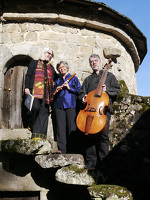
-
agenda Bessans
Musicales de l'Ouille Allègre - Openi...
- Concert
Tuesday, July 28
-
agenda Bonneval-sur-Arc
Musicales de l'Ouille Allègre - Conce...
- Concert
Thursday, July 30
-
agenda Bessans
Musicales de l'Ouille Allègre - Conce...
- Concert
Tuesday, August 4
-
agenda Bessans
Musicales de l'Ouille Allègre - List...
- Conference
Tuesday, July 28