

Snowfarming in Bessans
Reusing snow from one winter to the next
It’s no secret: at the end of winter, snow… melts. Unless… we preserve it! There’s no need here to invest in giant refrigerators to keep the “white gold” around. A 100% natural, locally sourced material is more than enough: by covering the snow with sawdust, it resists heat and can be preserved for many months. This is the “snowfarming” technique, which allows snow to be used from one winter to the next by insulating it from the ambient air and the summer sun using a clever mixture of sawdust.
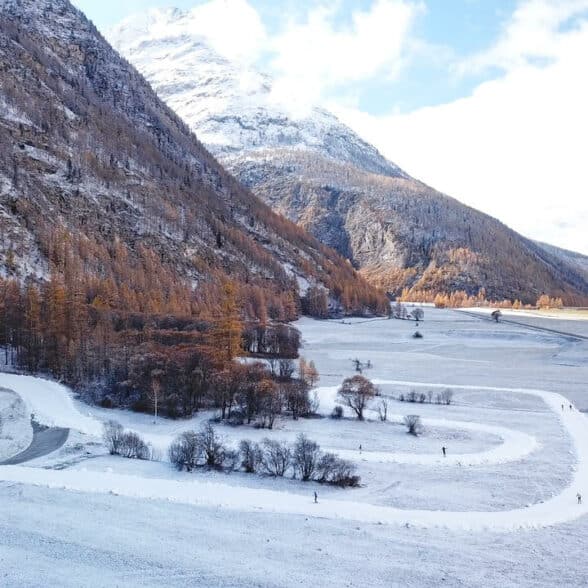
In Bessans, between January and March, several thousand cubic meters of snow are stored near the biathlon stadium. Chosen for its naturally cool, shaded environment and its proximity to the area to be covered with snow, this location facilitates snow preservation. In early November, if weather conditions are favorable (particularly cool temperatures) and following the advice of a weather expert, the layer of sawdust is removed. The snow can then be spread out to form a 3-kilometer loop.
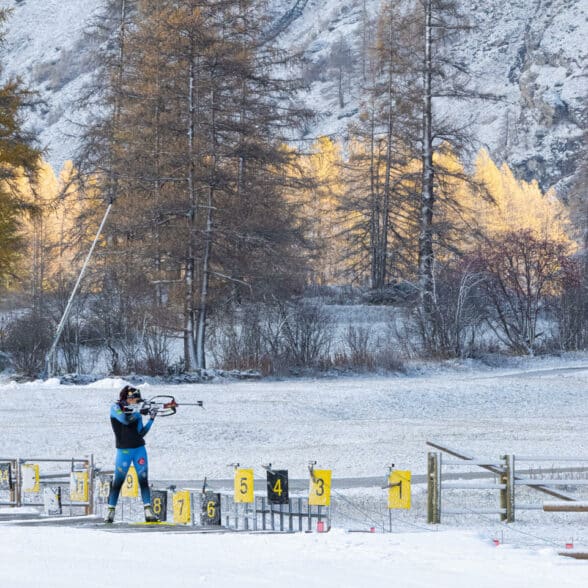
Skiers, whether amateurs or professionals, can then enjoy the thrill of skiing and shooting at the biathlon stadium. In fact, the French biathlon team held a training camp in Bessans in November 2025 to prepare for the 2026 Milan-Cortina Olympic Games.
What is snowfarming?
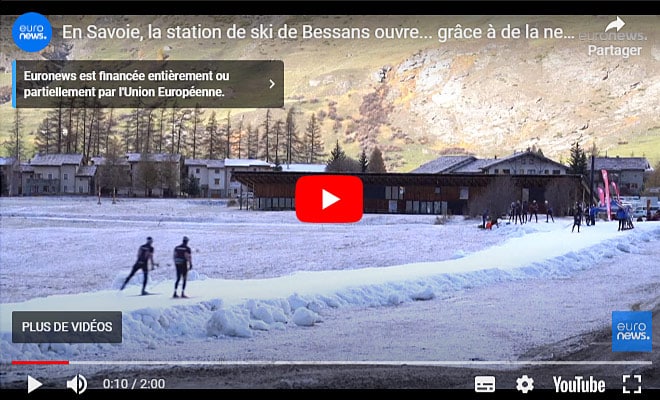
How does Bessans manage to keep snow from one season to the next? Is the technique sustainable?
Discover it with aEuronews report shot in November 2022.
Snowfarming in figures
• 30 to 50 cm: the thickness of the sawdust covering the snowdrift
• 1 week: the time needed to remove the sawdust and prepare the track.
• 3 km: the length of the trail scheduled to open on the first weekend of November thanks to snow farming.
• -1.2°: the average temperature in November in Bessans (15.7° on average in August, the hottest time of the year).